

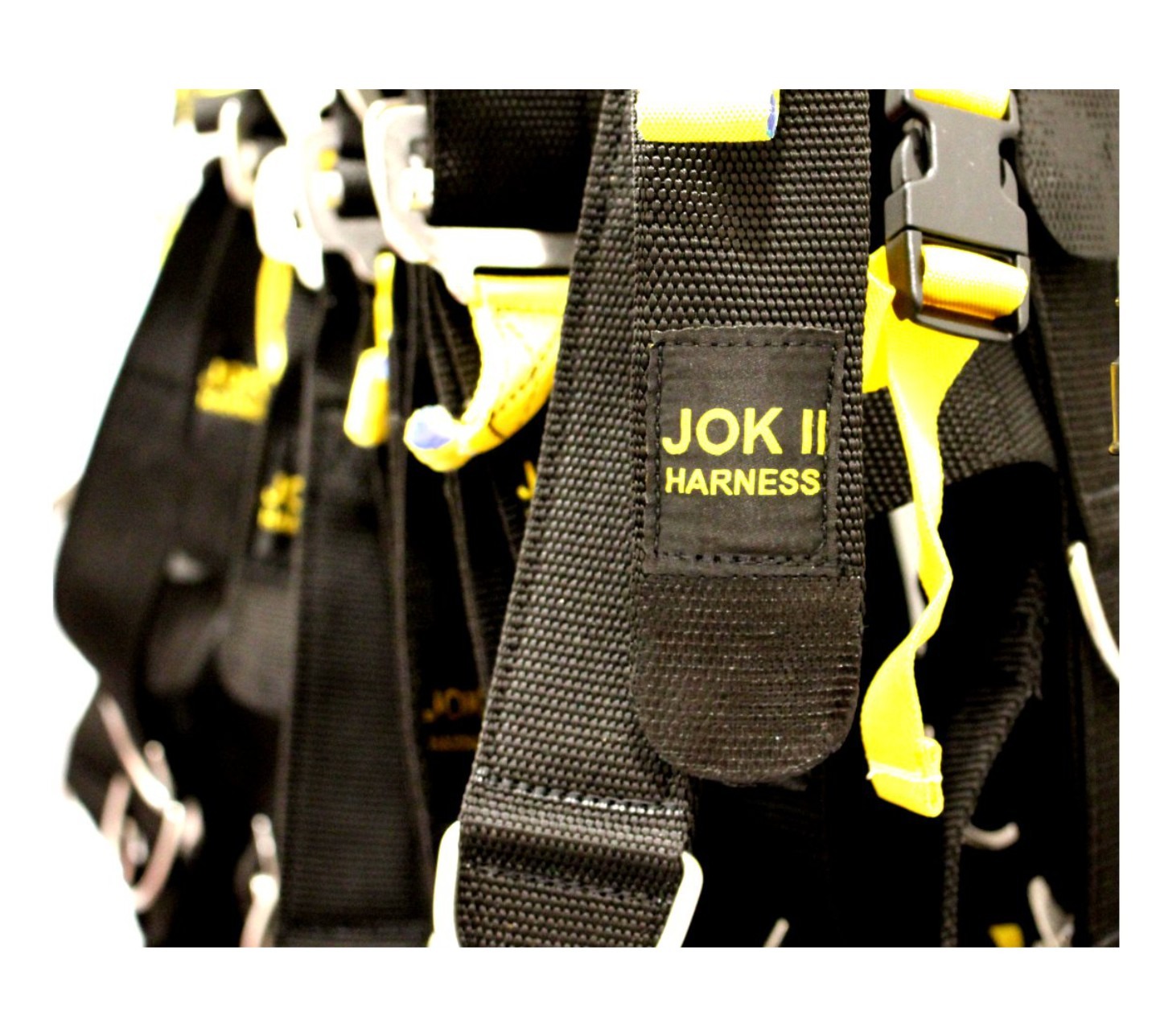
JOK Diver Recovery Harness MK II
CE marked commercial diving recovery harness
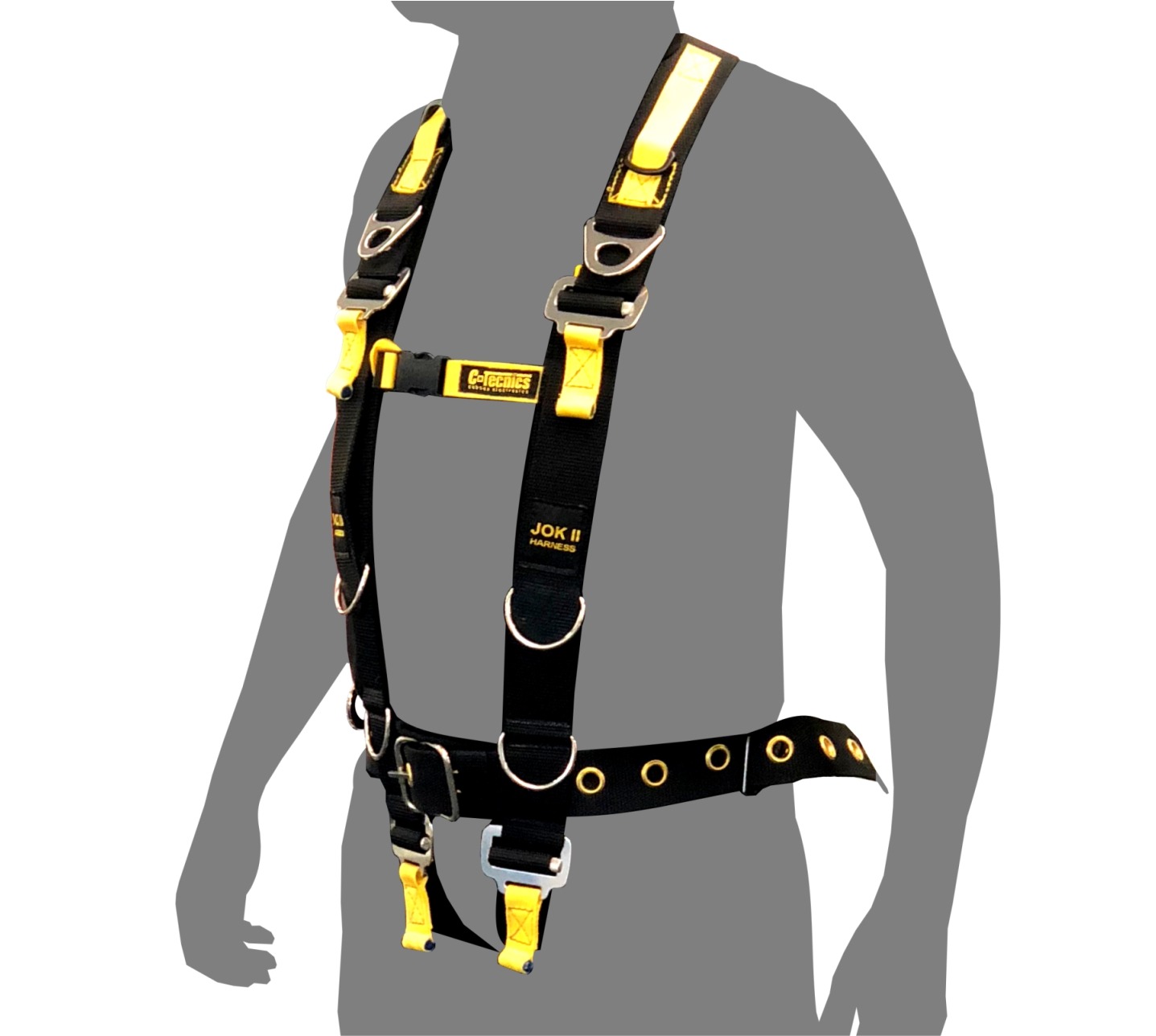
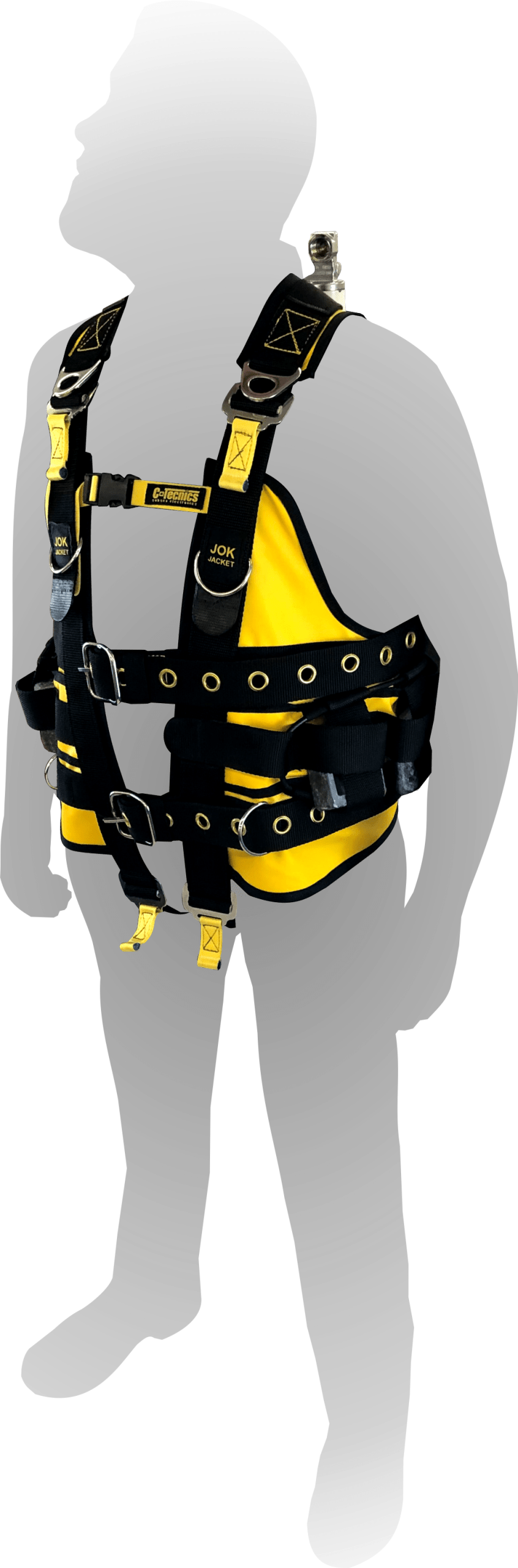
The JOK Diver Recovery Harness MK II has been developed through rigorous testing and extensive diver feedback to provide a reliable and safe solution for diver recovery operations.
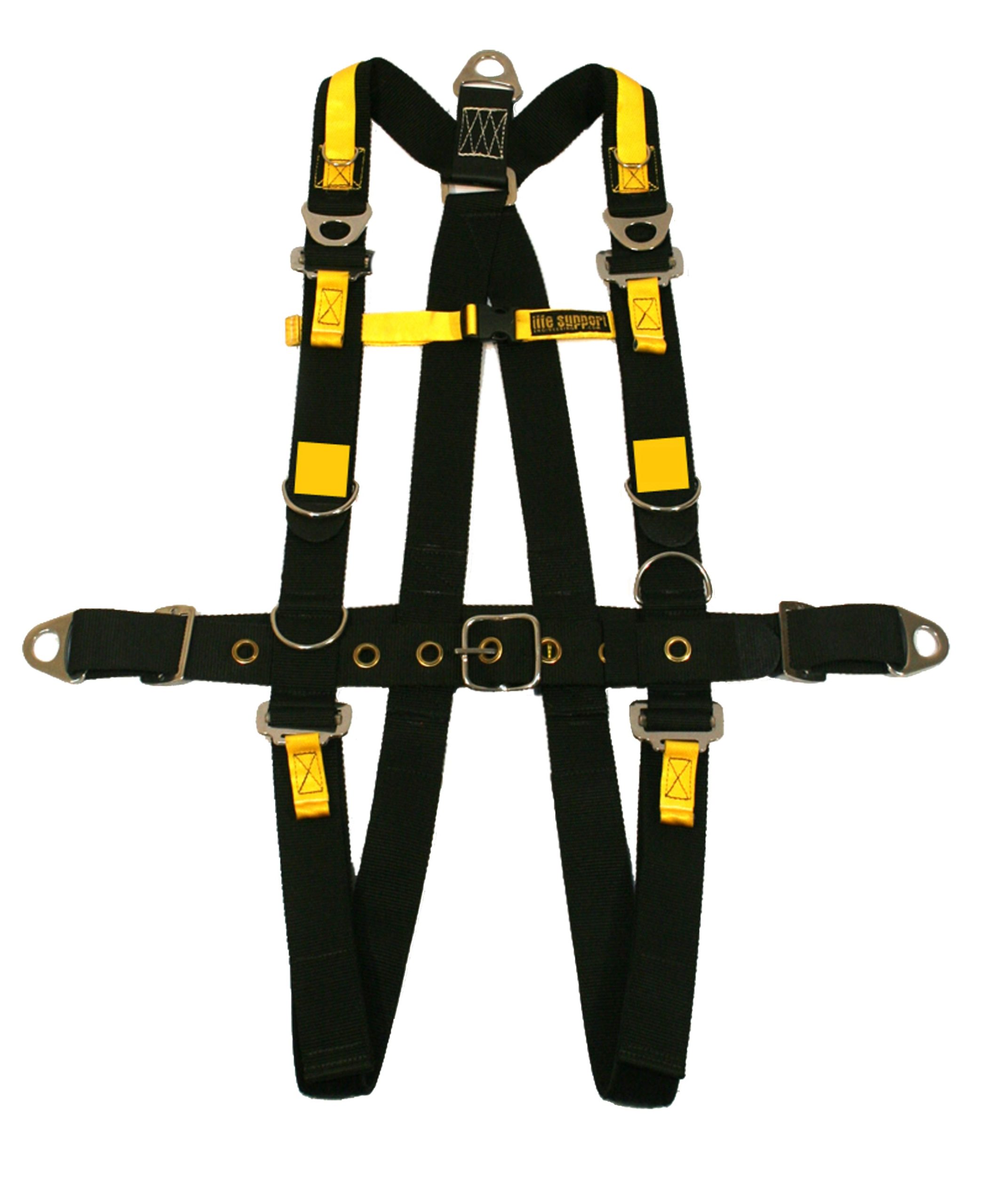
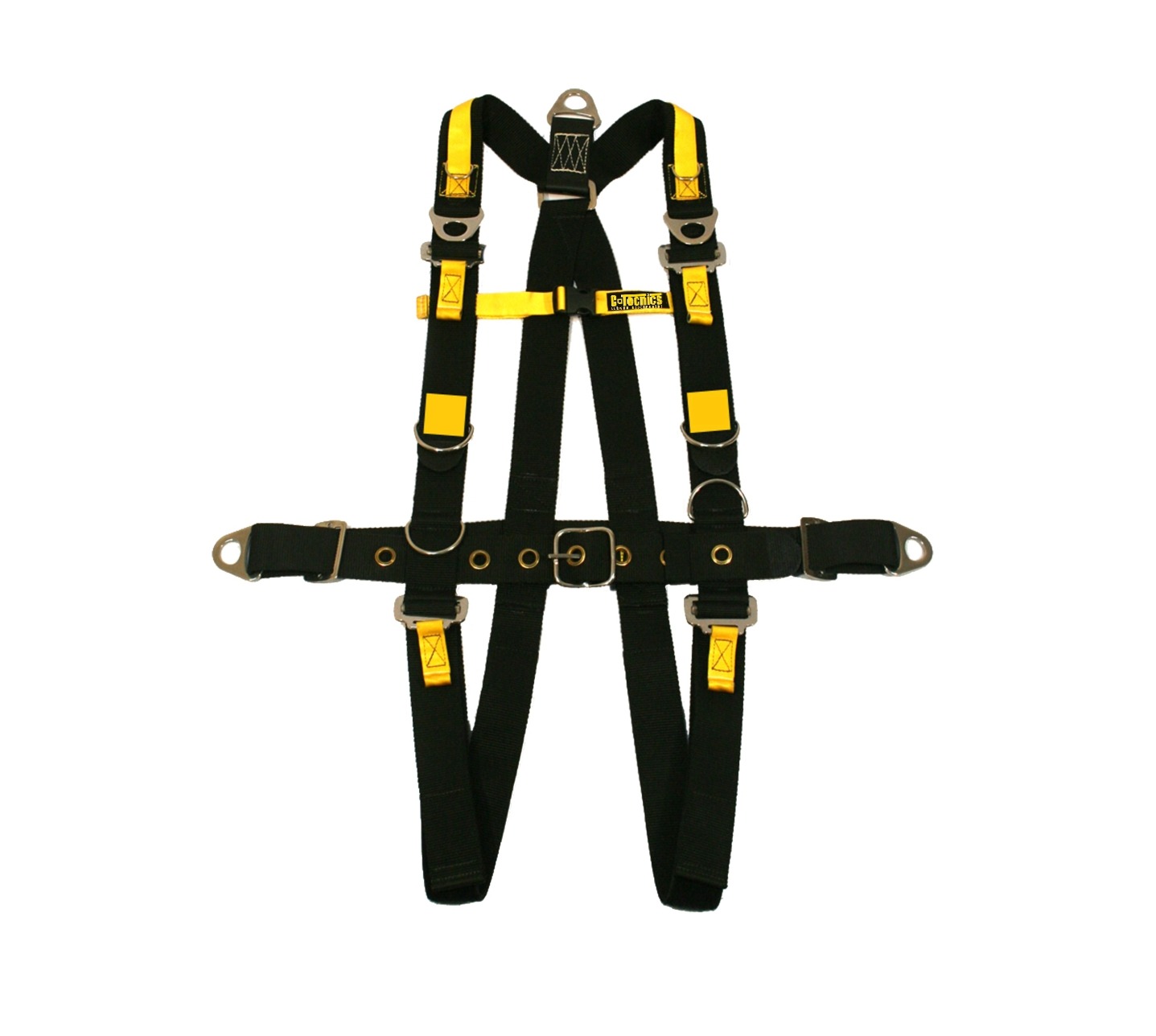
The design clearly differentiates between certified lifting points and lightweight attachment points through the use of specially profiled ‘D’ rings, ensuring correct use in low-visibility and high-stress conditions.
Key Features
- CE marked recovery harness for commercial diving
- Certified lifting points with profile-cut ‘D’ rings
- Adjustable, load-tested umbilical connection point
- Improved strap routing for enhanced load distribution
- Chest strap to prevent shoulder strap slippage
- Pin-style waist buckle for secure adjustment
- Ergonomic design for comfort in operational environments
Design and Development
The MK II harness builds on earlier designs through a structured development and testing process. Updates to webbing routing and load paths were implemented following testing, where previous configurations proved insufficient under load.
The harness has been designed to address real-world challenges identified by divers, including strap slippage, ergonomics and compatibility with existing equipment.
Safety and Testing
- Load tested to 9,000 N with no failure of stitching or webbing
- Developed in line with BS EN 15333:2008
- Designed with a 6:1 safety factor based on a fully equipped diver
- Dynamic loading considered for recovery in swell or wave conditions
The use of profile-cut ‘D’ rings removes ambiguity associated with traditional welded rings, which are not always certified for lifting due to uncertainty in weld integrity.
Industry Input and Validation
The harness design was informed by industry research, including a study conducted by Subsea7’s Group HSE Director, which identified common issues in diver recovery equipment such as:
- Misuse of non-certified attachment points
- Lack of recognised testing standards
- Inadequate inspection procedures
- Unauthorised modification of harnesses
- Poor fit and ergonomics
Input from experienced divers across multiple organisations contributed to improvements in usability, comfort and safety.
Maintenance and Inspection
It is recommended that the harness is included within a planned maintenance system (PMS). The harness should be inspected every six months by a competent person for signs of abrasion, stitching failure or component damage.
Reference should be made to relevant IMCA guidance, including DESIGN D018, to ensure continued suitability for use.
Send us an Inquiry
Ask about this product or add it to your Inquiry List.